27 Feb What might we learn from Butterflies…?
I was a Sales Representative at a global IT company in the mid ’80s.
South Africa was under local and international pressure given the then political situation. Disinvestment was a key driver to bring about change. However, our customers who had made significant investments in our technology required continuity of services and support. The Global company agreed to sell the South African business to local investors.
The business model had to be transformed. The butterfly enters the world through metamorphosis, so it became a symbol of that change in our workshops ‘meaning complete transformation’.
As you know the lifecycle of the butterfly starts with Egg to Caterpillar(larva) to Chrysalis(pupa) to Adult butterfly which continues the cycle.
As the saying goes “The only constant is change”
I think you will agree, to start out as a tiny egg, become a worm or caterpillar, sometimes not pretty, to a pupa even less pretty, which gives birth to a colourful insect is a magnificent marvel of nature.
The IT industry is in constant change. We have gone from the Computer Bureau who captured data on their systems and delivered the company age-analysis by hand to our door, to real-time global transactions in the Cloud.
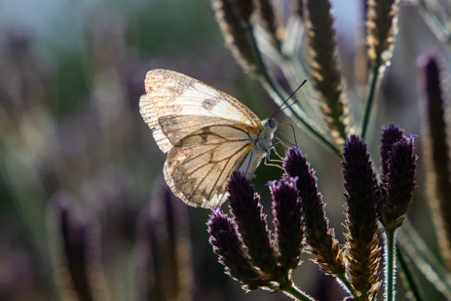
In November 2022, South Africans noticed the mass migration of small, brown-veined white butterflies.(Benenois aurota) Their annual migration takes between 80,000 and 155,000 butterflies per hour from South Africa’s Kalahari region to Mozambique, a journey of hundreds of kilometres via Gauteng. They are leaving the arid Kalahari in search of food and moisture. ( The Conversation 29 Nov 2022).
Since then, I have been observing brown-veined white butterflies, fly across our garden from November 2023 till today, but not in the volume as in 2022.
This led me to think about the butterfly more carefully and saw the parallel to business and people in business.
– the environment for the butterfly is unpredictable and hostile given the weather, birds and vehicles.
– this butterfly, flies randomly in an up and down motion to make it difficult for the birds to catch them. Other butterflies are less vulnerable and fly straight because they are poisonous to birds.
– the small, brown-veined butterfly continues on its mission to get to its destination, in this case, Mozambique.
– on the way, the butterfly will rest on flowers for seconds, picking up pollen and dropping it off on similar flowers along the way. While many flowers can self-pollinate, most require cross pollination.
– I have noticed the Monarch butterfly fly in the opposite direction to the white, brown-veined butterfly, also on a mission!
It is useful to consider some attributes of butterflies and align them to business and employees of that business:
The Butterfly:
– The butterfly is equipped to fulfil its mission.
– The focus is on its mission to destination and on pollinating flowers as it moves along.
– Persistence
– In the Environment
> Headwinds, storms, rain
> Predators
– An innate drive to reach their destination,
The Business:
– Does business have a clear representation of their plan?
– Are employees familiar with the goals and initiatives described in the plan?
– Are employees determined and equipped to meet the requirements?
– An ever-changing operating environment
– Competitors ( many of the pioneers of the seventies and eighties are ‘extinct’).
There are many lessons that can be learned from nature.
Business leaders who are in-tune with their operating environment and who harness the resources available to them such as their employees and partners, will meet their objectives while enduring headwinds, and enjoy the journey.
Wikipedia.org, Brittanica.com and The Conversation were referenced to compile this post.